

UEM vs. MDM: Key Differences You Need to Know

In today’s fast-paced digital world, managing an array of devices effectively is more crucial than ever. As businesses expand their technological footprint, the need for robust device management solutions becomes paramount. Two prominent solutions in this space are Unified Endpoint Management (UEM) and Mobile Device Management (MDM). While both aim to streamline device management and enhance security, they cater to different needs and offer distinct functionalities.
In this comprehensive guide, we’ll dissect the fundamental differences between UEM and MDM, helping you understand which solution aligns best with your organization’s goals and requirements.
What is Mobile Device Management (MDM)?
Mobile Device Management (MDM) is a technology designed to manage and secure mobile devices such as smartphones, tablets, and laptops. MDM solutions are tailored to control these devices remotely, ensuring that corporate data remains protected while allowing for user flexibility.
Key Features of MDM:
Device Enrollment:
MDM simplifies the process of enrolling devices into the management system. This feature enables IT teams to efficiently configure and manage devices, ensuring that all devices adhere to company policies from the outset.Security Policies:
MDM solutions enforce essential security measures such as password requirements, encryption, and remote wipe capabilities. These policies are crucial for protecting sensitive information and mitigating risks associated with lost or stolen devices.Application Management:
MDM provides tools for installing, updating, and removing applications on managed devices. This functionality ensures that users have access to necessary tools while preventing unauthorized software, which can pose security risks.Remote Monitoring:
The ability to track device usage and performance remotely is a significant advantage of MDM. IT teams can monitor device health, address issues proactively, and troubleshoot problems without requiring physical access to the device.Compliance Management:
MDM helps ensure that devices comply with regulatory requirements and organizational policies. This includes managing settings and configurations that align with industry standards and legal requirements.
What is Unified Endpoint Management (UEM)?
Unified Endpoint Management (UEM) is an advanced solution that extends beyond mobile devices to manage a wide range of endpoints. UEM integrates Mobile Device Management (MDM) with Enterprise Mobility Management (EMM) and Client Management Tools (CMT), offering a unified platform for managing desktops, laptops, IoT devices, and more.
Key Benefits of UEM:
Comprehensive Device Management:
UEM provides a holistic approach to managing all types of endpoints from a single platform. This includes mobile devices, desktops, laptops, and IoT devices, facilitating centralized control and streamlined management.Advanced Security:
UEM solutions offer enhanced security features such as Zero Trust architecture, identity and access management, and real-time threat detection. These advanced measures provide a robust security framework that extends across all types of endpoints.Application and Content Management:
UEM encompasses the entire lifecycle of applications and content management. It ensures secure access to corporate data and applications across all devices, enhancing productivity while safeguarding information.Automation and Insights:
Leveraging automation tools and AI-driven insights, UEM platforms optimize device management processes. They provide valuable analytics on device performance, security threats, and user behavior, enabling informed decision-making and proactive management.Cross-Platform Integration:
UEM supports multiple operating systems and platforms, including Windows, macOS, Linux, Android, and iOS. This cross-platform capability simplifies the management of diverse IT environments and integrates seamlessly with existing infrastructure.
Key Differences Between UEM and MDM
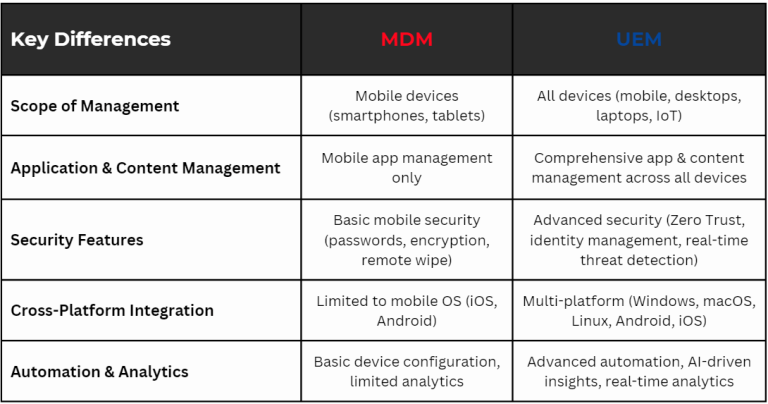
1. Scope of Management
- MDM: Focuses primarily on mobile devices, including smartphones and tablets. It is tailored for managing these specific types of devices, offering specialized tools and features for mobile environments.
- UEM: Offers a broader scope, managing all types of endpoints, including mobile devices, desktops, laptops, and IoT devices. UEM provides a unified platform for comprehensive device management across diverse environments.
2. Application and Content Management
MDM: Handles application management specifically for mobile devices. It allows for the installation, updating, and removal of apps on smartphones and tablets.
UEM: Provides extensive application and content management across all device types. UEM ensures secure access to applications and data, facilitating a cohesive approach to managing software and content.

3. Security Features
MDM: Focuses on essential security features for mobile devices, such as password enforcement, encryption, and remote wipe capabilities.
UEM: Integrates advanced security measures, including Zero Trust architecture, identity and access management, and real-time threat detection. UEM provides a more robust security framework that covers all endpoints.
4. Cross-Platform Integration
MDM: Often limited to specific operating systems and platforms, such as iOS and Android for mobile devices.
UEM: Supports multiple operating systems and platforms, including Windows, macOS, Linux, Android, and iOS. This cross-platform support simplifies the management of a mixed IT environment.
5. Automation and Analytics
MDM: Primarily focuses on basic device configuration and security, with limited analytics capabilities.
UEM: Includes automation tools and AI-driven insights to optimize device management. UEM platforms offer real-time analytics on device performance, security threats, and user behavior, enhancing management efficiency.
Conclusion
Choosing between UEM and MDM depends on your business’s specific needs and the complexity of your IT environment. MDM is ideal for managing mobile devices and offers specialized tools for mobile-centric management. UEM, on the other hand, provides a comprehensive solution for managing a diverse range of endpoints, with advanced security and management features.
By understanding these key differences, you can make an informed decision that aligns with your business goals and infrastructure. Whether you opt for MDM or UEM, investing in the right device management strategy will ensure that your devices are secure, your operations run smoothly, and your business remains agile in a dynamic digital landscape.
Related Post

Published: March 26,2026 What Is Apple Business? Features, MDM & Benefits Explained Running a business today isn’t just about delivering products or …

Published: March 4,2026 Turning IT Assets into Long-Term Value with CHN DaaS – AI ready Workplace Platform In many organizations, IT devices …
Published: February 5,2026 Xcode 26.3 Introduces Agentic Coding with Claude & OpenAI Codex Introduction Apple has taken a major step forward in …

Published: January 30,2026 MDM for iOS: How the Japanese School of Johor Simplified iPad Management Introduction: Managing iPads Shouldn’t Be This Hard …