

- Published: March 4,2026
Turning IT Assets into Long-Term Value with CHN DaaS - AI ready Workplace Platform
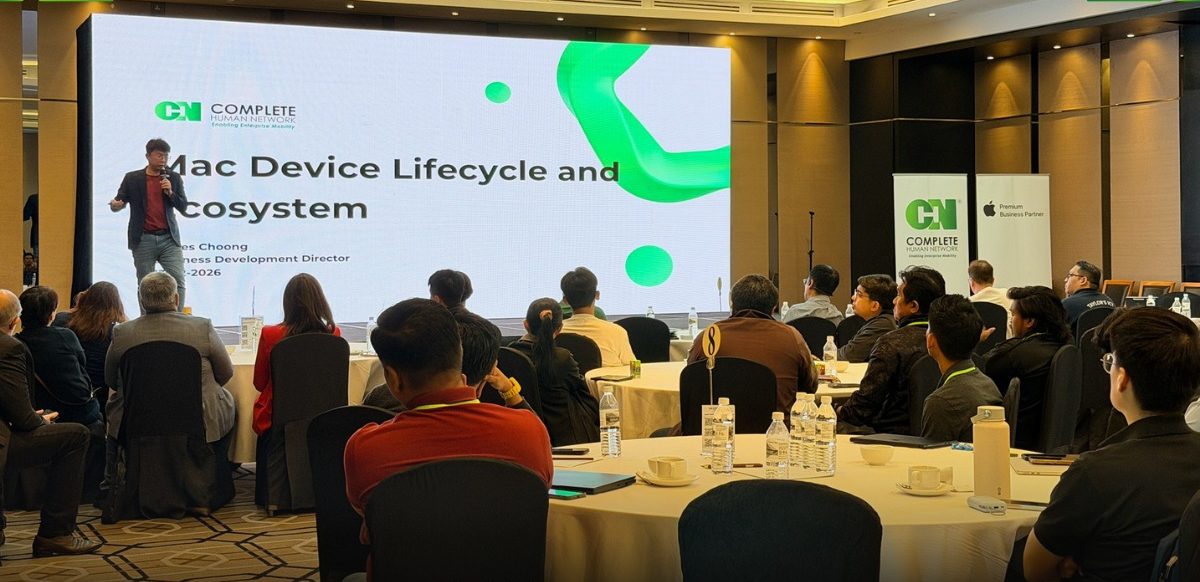
In many organizations, IT devices are treated as short-term operational necessities. Laptops are purchased, deployed, depreciated and eventually replaced. Once retired, they are often seen as liabilities, outdated hardware that must be disposed of quickly and quietly.
But what if enterprise devices were not viewed as consumables, but as assets capable of delivering long-term strategic value?
At Complete Human Network (CHN), we believe that the real opportunity lies not just in how devices are deployed but in how they are managed across their entire lifecycle.
The Problem with the Traditional IT Model

For years, IT procurement followed a linear path. Devices are acquired in bulk, distributed to employees, and replaced every three to five years. Disposal is typically treated as an administrative task rather than a strategic decision.
This traditional ownership-based approach often creates budgeting strain and limited lifecycle transparency. When comparing DaaS vs traditional IT procurement models, it becomes clear that linear purchasing structures rarely account for long-term value recovery.
Unstructured refresh cycles disrupt budgets. End-of-life devices pose data security risks. Residual asset value is rarely recovered, and electronic waste continues to grow. Most importantly, organizations lose visibility and control over the full lifecycle of their technology investments.
From Ownership to Lifecycle Strategy
The shift from ownership to lifecycle management is redefining enterprise IT.
Rather than focusing solely on acquisition, forward-looking organizations are planning for recovery from day one. Devices are tracked, monitored and refreshed within a structured framework that aligns financial planning, governance and sustainability objectives.
This lifecycle-driven mindset reflects the broader circular economy principles advocated by global organizations such as the Ellen MacArthur Foundation. The concept is simple: reduce waste, extend usability and preserve value for as long as possible.
Applied to enterprise IT, this means devices remain accountable assets throughout their lifespan not disposable hardware at the end of a budget cycle.
Security Is a Lifecycle Responsibility

When devices reach end-of-life, they still contain critical business data. Without certified data erasure and documented recovery processes, organizations expose themselves to compliance and reputational risk.
Guidelines from the National Institute of Standards and Technology emphasize strict data sanitization standards. Yet many enterprises lack structured procedures to ensure these standards are consistently met.
By embedding secure recovery and certified data erasure into the lifecycle model, CHN ensures that devices transition safely from active use to refurbishment or recycling. This transforms disposal from a risk point into a controlled, auditable process.
Sustainability as a Measurable Business Outcome

Sustainability is no longer confined to corporate social responsibility initiatives. It has become a measurable governance metric.
Electronic waste is one of the fastest-growing waste streams globally. Without structured lifecycle planning, enterprise device refresh cycles contribute directly to environmental impact.
By extending usable life, enabling refurbishment, and ensuring responsible recycling, CHN’s approach supports ESG alignment while maintaining operational efficiency.
For organizations expanding across Malaysia and the wider Southeast Asian region, sustainability is increasingly part of procurement conversations and partner evaluations. Circular lifecycle management strengthens long-term credibility.
Financial Predictability and Asset Visibility
Turning IT assets into long-term value also means improving financial intelligence.
Under a structured lifecycle model, organizations gain clearer forecasting over refresh cycles, more predictable operating costs, and better insight into asset utilization. Devices are no longer replaced reactively; they are refreshed strategically.
This level of visibility supports smarter capital allocation and reduces the shock of large, periodic hardware investments.
In fast-growing enterprises, especially those scaling regionally, this predictability is critical.
CHN DaaS: Enabling Circular Value Creation
CHN’s Device as a Service model is designed around lifecycle accountability.
Devices are deployed within a managed framework that includes monitoring, lifecycle planning, secure recovery, and responsible reintegration. Instead of ending in storage rooms or unmanaged disposal channels, devices follow a structured transition path that preserves value and protects data integrity.
This approach transforms enterprise mobility from a cost center into a controlled, value-driven ecosystem.
IT assets continue contributing to business performance beyond their initial deployment phase whether through redeployment, refurbishment or responsible recycling with documented compliance.
A Strategic Shift for Modern Enterprises
The organizations that gain competitive advantage are not necessarily those that own the most devices but those that manage them most intelligently.
Turning IT assets into long-term value requires a shift in mindset:
- From purchasing to planning.
- From replacement to lifecycle design.
- From disposal to responsible reintegration.
- CHN DaaS enables this shift by aligning security, sustainability, and financial control within a single lifecycle strategy.
For enterprises seeking operational resilience and long-term governance strength, the future of IT is not linear. It is structured, accountable, and circular.