

Piaget’s Vision: Education to Create Innovators
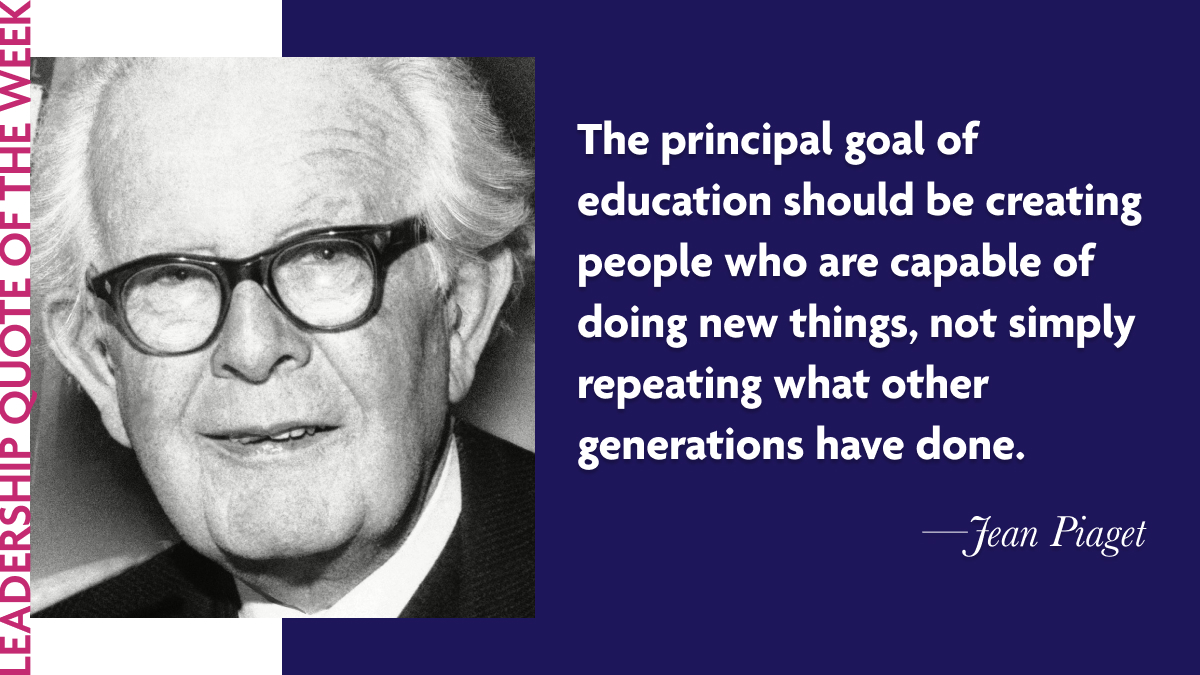
Jean Piaget once said, “The principal goal of education is to create people who are capable of doing new things.” His words resonate deeply in today’s rapidly changing world. As educators in schools, the question arises: how can we prepare students not only to adapt but also to innovate in a future filled with uncertainty?
The Challenge of Modern Education
Traditional education systems have often prioritized rote memorization and standardized testing. While these methods ensure a baseline of knowledge, they rarely inspire creativity or critical thinking—the skills necessary for students to thrive in the 21st century. Modern classrooms must evolve, shifting focus from mere knowledge acquisition to fostering innovation, collaboration, and problem-solving.
But how do we achieve this transformation in a practical, impactful way?
Creating an Environment for Innovation
In Malaysia, education is evolving to meet the demands of the future, but significant strides are still needed to ensure that students are prepared not only to adapt but to innovate in an ever-changing world. Piaget’s philosophy offers valuable insights into this transformation.
Educators are encouraged to create environments where students can experiment, collaborate, and think critically—key skills that will empower them to tackle the challenges of tomorrow. Here are a few strategies to drive this shift in classrooms:
- Embrace Project-Based Learning (PBL): Project-based learning is gaining traction in Malaysia’s educational landscape, particularly in initiatives like the Program Pendidikan STEM Negara (National STEM Education Program). PBL allows students to engage with current world’s problems such as environmental sustainability, social entrepreneurship, and technological innovation. These projects not only raise creativity but also build critical problem-solving and collaboration skills that are crucial in the 21st century.
- Prioritize STEM and STEAM Education: The government has recognized the importance of STEM education through various national policies, such as the Blueprint for the Development of the Malaysian Education System 2013-2025. Integrating Arts into the traditional STEM model (creating STEAM) nurtures a holistic approach, combining analytical and creative thinking. Students can be equipped with the skills to innovate by participating in STEM competitions, coding camps, and interdisciplinary learning experiences.
Cultivate a Growth Mindset:
Encourage students to view failures as opportunities to learn. A growth mindset empowers them to take risks, experiment, and persist in the face of challenges, laying the foundation for original thinking.Integrate Technology: Technology is more than a tool; it’s a gateway to boundless creativity. Tools like coding platforms, 3D printers, and collaborative software open doors to new learning opportunities. However, this requires robust infrastructure and strategic investment.

The Role of Leadership in Driving Change
School leaders, particularly principals and administrators, play a pivotal role in transforming education. To create a system that nurtures innovation:
Invest in Teacher Training: Teachers are the facilitators of creativity. Equipping them with modern teaching methodologies and technologies empowers them to inspire students effectively.
Build Collaborative Spaces: Innovation thrives in spaces that encourage collaboration. Designing classrooms and labs for teamwork and interaction fosters the free exchange of ideas.
Adopt Flexible Policies: Rigid schedules and curricula can stifle creativity. Flexible policies that allow experimentation with teaching methods or learning modules can make a significant difference.
Technology as the Backbone of Innovation
One of the most critical enablers of a creative education environment is technology. However, managing technology—from procurement to maintenance—can be daunting for schools already balancing tight budgets and resource constraints.
Here’s where Device-as-a-Service (DaaS) enters the picture.
DaaS is a subscription-based model that provides schools with the latest technology, ensuring every student has access to state-of-the-art devices without the burden of large upfront costs. Let’s explore its key advantages:
Cost-Efficiency: Schools can reduce IT spending by up to 25% by switching to a DaaS model, as it eliminates the need for large capital expenditures and unpredictable repair costs.
Seamless Maintenance: With DaaS, unexpected repair and upgrade costs are eliminated, as they now fall into a predictable monthly price, reducing downtime and ensuring uninterrupted learning.
Scalability: As student populations grow or curricula evolve, DaaS allows easy scaling to meet new demands. For instance, schools can add devices quickly during peak enrollment periods.
Sustainability: By extending the lifecycle of devices and offering recycling programs, DaaS supports environmentally responsible practices. In fact, producing a new laptop generates approximately 250 kg of CO₂, while a laptop entering its second life generates approximately 7 kg of CO₂, significantly reducing the environmental impact.
Solution: CHN DaaS
Transforming education to create innovators and leaders is no small task. It requires vision, investment, and commitment. As a principal or school decision-maker, you have the unique opportunity to shape the future by embracing innovation in your institution.
CHN’s Device-as-a-Service can be your partner in this journey, providing the technological backbone to support modern teaching methods and boost creativity. Imagine classrooms equipped with the latest tools, students collaborating effortlessly on shared devices, and teachers empowered to deliver inspiring lessons—all without the stress of managing IT infrastructure.
Recent Post

Published: July 30, 2026 How to Make Your Microsoft Security Stack Work Better for Macs Microsoft has become the foundation of modern …

Published: July 9, 2026 Which Is the Best iPad for Students in 2026? iPad vs iPad Air vs iPad Pro Choosing the …

Published: July 1, 2026 Turning Mac into PC Dominated IT Environment Even in today’s modern workplaces, most enterprise IT environments are still …

Published: June 18, 2026 Your Team Wants Mac. Your Business Uses Windows. Here’s How to Make Both Work Most IT systems in …